Hashing Mcp Server
Overview
MCP Server for cryptographic hashing
A Model Context Protocol (MCP) server for MD5 and SHA-256 hashing. This server enables LLMs to process cryptographic requests efficiently.
Available Tools
The server offers 2 tools:
calculate_md5: Computes the MD5 hash of a given text.calculate_sha256: Computes the SHA-256 hash of a given text.
The server is designed to be used with MCP clients like VS Code Copilot Chat, Claude for Desktop, and other LLM interfaces that support the Model Context Protocol.
Understand MCP and Build Your Own MCP Server
If you are new to the concept of Model Context Protocol (MCP), then you can use these resources:
- What is MCP?
- How can I build my own MCP Server?
- Where to find the
hashing-mcp-serverpackage?- You can find the Python Package on PyPI
- You can find the source code in this GitHub repository
- See the sections below for installation and usage instructions.
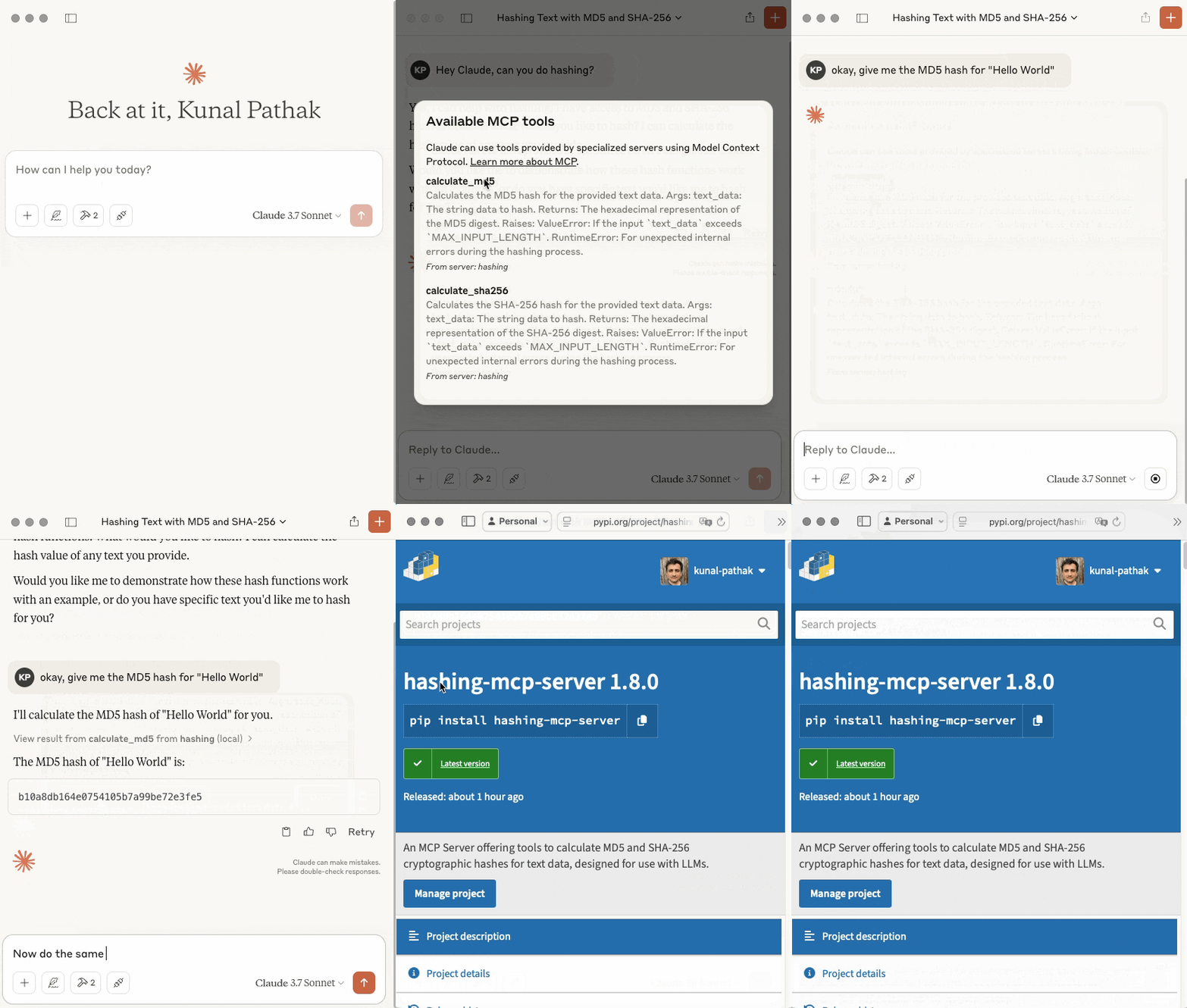
Server in action
The gif below shows how the MCP server processes requests and returns the corresponding cryptographic hashes.
I have used Claude Desktop as an example, but it works equally well with other MCP clients like VSCode.
Server Config
{
  "mcpServers": {
    "hashing-docker": {
      "command": "docker",
      "args": [
        "run",
        "-i",
        "--rm",
        "kunalpathak13/hashing-mcp-server:latest"
      ]
    }
  }
}
Project Info
Created At
a year agoUpdated At
a year agoAuthor Name
KunalPathakStar
-Language
-License
-Recommend Servers
View AllItaly Payments Mcp
@junter1989k-ai
12 days ago
Slovakia Payments Mcp
@junter1989k-ai
12 days ago
Sweden Payments Mcp
@junter1989k-ai
12 days ago
Rwanda Payments Mcp
@junter1989k-ai
12 days ago
Uae Payments Mcp
@junter1989k-ai
13 days ago
Bangladesh Payments Mcp
@junter1989k-ai
12 days ago
France Payments Mcp
@junter1989k-ai
13 days ago
Uganda Payments Mcp
@junter1989k-ai
12 days ago
Spain Payments Mcp
@junter1989k-ai
12 days ago
Greece Payments Mcp
@junter1989k-ai
12 days ago
Romania Payments Mcp
@junter1989k-ai
12 days ago
Kenya Payments Mcp
@junter1989k-ai
13 days ago
Ghana Payments Mcp
@junter1989k-ai
13 days ago
Croatia Payments Mcp
@junter1989k-ai
12 days ago
Nepal Payments Mcp
@junter1989k-ai
12 days ago
Algeria Payments Mcp
@junter1989k-ai
12 days ago
Cyprus Payments Mcp
@junter1989k-ai
12 days ago
Tanzania Payments Mcp
@junter1989k-ai
12 days ago
Switzerland Payments Mcp
@junter1989k-ai
12 days ago
Bahrain Payments Mcp
@junter1989k-ai
12 days ago
Zambia Payments Mcp
@junter1989k-ai
12 days ago
Uruguay Payments Mcp
@junter1989k-ai
12 days ago
Qatar Payments Mcp
@junter1989k-ai
12 days ago